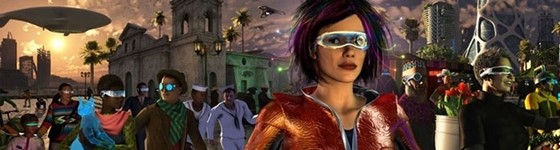
Giddy optimists foretell our coming transcendence to a golden age of AI-managed abundance. Glowering doomers predict that vast cyber-minds — cold and unsympathetic — will either crush old style humanity or render us irrelevant.
Meanwhile, geniuses fostering the artificial intelligence boom clutch clichés rooted in our wretched human past, or else cheap sci-fi ... as critics demand state regulation, ‘kill switches,’ or coercive programming. Or to seek a soft-landing with AI by ‘teaching ethical values’ to synthetic minds who see innumerable counterexamples in their training sets, then collude and manipulate for advantage, when given 'agency.'
The lessons and tools we’ll need, in order to achieve a ‘soft-landing’ with Artificial Intelligence, already exist in modern society — in a myriad ways that modern citizens right now interact with each other, and in how we raise our biological children. Tools that we used to build a gradually improving, enlightenment civilization.
But first, shall we stop proclaiming hoary clichés and turn back to examine what already works?
Find out more, or purchase Ailien Minds. (#AmazonCommissionsEarned)
Now available for pre-order — revised and updated with new material. Hugo, Locus, and Nebula Award–winning author David Brin has taken readers on exciting adventures in his fiction with his Uplift universe and novels like The Postman. Now he invites them on a remarkable journey into the mind of one of America’s greatest science fiction writers: himself.
Scintillating and incisive, Through Stranger Eyes is an opinionated free-for-all that is sure to enlighten and entertain, possibly infuriate, or make you laugh. This is the world as David Brin sees it.
Brin shares his thoughts on books like J.R.R. Tolkien’s The Lord of the Rings and Anne McCaffrey’s Dragonrider series. He also discusses movies like The Matrix, George Lucas’s Star Wars saga, and TV’s Buffy the Vampire Slayer. He sings the praises of familiar authors like Isaac Asimov, Jack Williamson, and Arthur C. Clarke, as well as unfamiliar works like popular science books that touch on his own ideas as an astrophysicist. He even expounds on the storytelling process and the craft of writing.
Find out more, or pre-order Through Stranger Eyes (#AmazonCommissionsEarned)
Adventure, resilience, and the power of unlikely friendships come together in this thrilling new addition to David Brin's Out of Time series!
In the 24th century, Earth's fragile alliances hang in the balance. On the alien planet New Horizon, a pioneering research team goes silent amid a sudden, brutal winter — and rumors of sabotage by unknown intelligences. With advanced tech faltering and tensions rising, Earth's last hope lies in the past.
From colonial New England, 17th-century farm girl Patience Whately has survived war, loss — and worse. From the 19th century, Norwegian snow-sport prodigy Sondre Auverson knows how to navigate any blizzard. And from the summer of 1978, Lee Jarrett is equal parts courage and curiosity, armed with only a harmonica and a stubborn streak.
Joined by two young volunteers from the future, they must brave alien forests, strange snow, and a hostile wilderness with secrets buried deep beneath the drifts. Can five kids from across time out-think an alien world? Would you want to be Yanked out of time, if it meant you could help save the future?
Purchase Snowdance today, or learn more about all the books in the Out of Time series. (#AmazonCommissionsEarned)
David Brin's science fiction novels and short stories have been New York Times Bestsellers, winning multiple Hugo, Nebula and other awards. At least a dozen have been translated into more than twenty languages. Novels include bold and prophetic explorations of our near-future, including The Postman (filmed in 1997) plus Earth and Existence.
His Uplift series plunges farther, envisioning galactic issues of sapience and destiny (with star-faring dolphins!) and includes Hugo Award winners Startide Rising and The Uplift War.
Short stories and novellas have different rhythms and artistic flavor than a complete novel. David Brin's short stories and novellas, several of which earned Hugo and other awards, exploit that difference to explore a wider range of real and vividly speculative ideas. Frequently, his shorter fiction explores the human desire (bordering on obsession!) to find or invent other intelligent life forms.
Many of his shorter fiction has been selected for anthologies and reprints, and most have been published in anthology form; still others can be read on this website.
press kit
major interviews: print, podcast & audio and video
complete professional biography
compilation of media: films, radio & TV
Brin quotes and frequently asked questions
favorite social media hangouts
to interview or book DAVID BRIN, email him at info@davidbrin.com
David Brin's Ph.D in Physics from the University of California at San Diego (the lab of nobelist Hannes Alfven) followed a masters in optics and an undergraduate degree in astrophysics from Caltech.
Every science show that depicts a comet now portrays the model developed in Brin's PhD research — a spinning icy mass insulated by carbonaceous dust, with sun-heated, geyser-jets spewing particles into space. See the Astrophysical Journal paper "Three Models of Dust Layers on Cometary Nuclei" or an abstract of the dissertation: "Evolution of Cometary Nuclei as Influenced by a Dust Component."
David Brin's non-fiction book, The Transparent Society: Will Technology Force Us to Choose Between Freedom and Privacy?, continues to receive acclaim for its accuracy in predicting 21st Century concerns about online security, secrecy, accountability and privacy.
Other papers published in peer-reviewed scientific journals cover an eclectic range of topics, from astronautics, astronomy, and optics to alternative dispute resolution and the role of neoteny in human evolution.
Two of the peer-reviewed articles can be read here:
"Neoteny and Two-Way Sexual Selection in Human Evolution," (J. Social and Evolutionary Systems 18(3) 1996), speculates why we turned out so strange compared to other species.
The lead article in the American Bar Association's Journal on Dispute Resolution (15(3) 2000), "Disputation Arenas: Harnessing Conflict and Competition," looks at how truth is determined in our four "accountability arenas" — science, democracy, courts and markets.
David Brin is best-known as a 'futurist' who speaks plausibly and entertainingly about trends in technology and society to audiences willing to confront the challenges that our rambunctious civilization will face in the decades ahead. He also talks about the field of science fiction, especially in relation to his own novels and stories.
Throw in curiosity about science- and tech-driven change, an immersion in history/anthropology, plus an avid belief in the potential of human civilization, and to date he has presented at more than 200 meetings, conferences, corporate retreats and other gatherings.
David Brin contributes his knowledge and expertise about information-age issues, scientific trends, future social and political trends, and education to corporations, governmental and private defense- and security-related agencies.
Past venues include Google, Microsoft, IBM, GE, Viacom, Boeing, PayPal, Procter & Gamble, Qualcomm, SAP, LaBatt, Imation, Mitre, Swissnex, FiRe — Future in Review Conference (yearly since 2001), TTI/Vanguard, Service Industry Association, Zimmer Gunsul Frasca, SAIC, and many others.
OMNI Online listed The Postman as one of ten science fiction books that changed the genre forever. read it here
Urban Developer Magazine named David Brin one of four “World’s Best Futurists” — in august company with Kevin Kelly, Michio Kaku and Ray Kurzweil. read it here
David Brin appears on onanalytica.com's list as the top individual influencer on Artificial Intelligence. read it here
David Brin has been named a Top Quora Writer for 2017 (second year in a row). follow him on Quora
Thomson Reuters just published one of David Brin's best interviews about Artificial Intelligence and ways to get a "soft" singularity. His proposal re AI is (alas) not offered anywhere else, though it's the only one that can possibly work... because it already has worked, increasingly well, for 200 years. read it here
David was interviewed about transparency, freedom and the future by the Indian magazine Factor Daily, with emphasis on India's ambitious Aadhaar Program to digitize all billion of the nation's people. read it here
Here & Now's Jeremy Hobson interviews Brin and Boise State University professor Justin Vaughn about the ways in which our cameras-everywhere culture is affecting the candidates, presidential campaigns and us. Brin's podcasts page has more like this
Who could've predicted that social media would play such an important role in the 21st Century — restoring the voices of advisors and influencers!
Since 2004, David Brin has maintained a blog about science, technology, science fiction, books, and the future — themes his science fiction and nonfiction writings continue to explore.
Who could've predicted that social media — indeed, all of our online society — would play such an important role in the 21st Century — restoring the voices of advisers and influencers! Urban Developer Magazine recently named David Brin one of four World's Best Futurists, and he was cited as one of the top 10 writers the AI elite follow.
The lively and intelligent comments posted in response to BRIN's blogs, videos, podcasts and articles spill over onto his social media pages.
All the Ways in the World to Reach David Brin
wikipedia page
view David's wikipedia page
isfd page
view David's internet speculative fiction database page
subscribe to David Brin's newsletter and keep up to date on his books, signings and appearances
share David Brin's pins from these Pinterest boards and share the word about science and science fiction
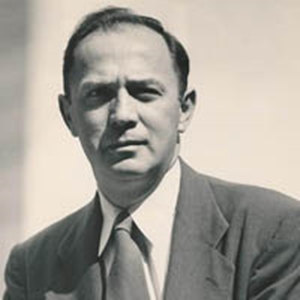
A tribute page about my father, journalist and poet Herb Brin, appears here. The page includes access to his fascinating autobiography, "Shouting for Justice: The Journey of a Jewish Journalist Across the Century of Hitler and Israel," his two investigatory travelogues, and his internationally-acclaimed books of poetry — some with prefaces by Elie Weisel, recipient of the Nobel Prize for Literature. Several of his poems are available to read on the page.
Herb Brin was born in the vibrant immigrant enclave of Chicago's Northwest Side and after high school staked out the beginning of his lifetime career in the brawling journalism of 1930s Chicago, covering gangland killings, corrupt politics and the aching heart of poverty.
After soldiering in World War II, he took the advice of another great journalist, went West and back into the fourth estate. He was earning a reputation as one of the liveliest feature writers on the Los Angeles Times when he suddenly turned his back on the safe, monthly paycheck and dove bravely into the swirling waters of Jewish journalism.
It was then that he established Heritage, which, despite glum predictions, survived, matured and thrived, and expanded into a chain of four lusty Southern California weeklies. Herb went on to become one of the most honored Jewish newspapermen of his day.
If you feel moved to read his work, please leave a comment on Herb Brin's Memorial Facebook page.
Also available: "The Menorah Man," a fantasy "written only for children and their dreams."