I believe writing was the first truly verifiable and effective form of magic. Think of how it must have impressed people in ancient times! To look at marks, pressed into fired clay, and know that they convey the words of scribes and kings long dead -- it must have seemed fantastic. Knowledge, wisdom and art could finally accumulate, and death was cheated one part of its sting. read on
Years ago, about the same time that studios were bidding for The Postman, my wife Cheryl and I went to a screening of Field of Dreams. As we emerged, she turned to me and said, "That's him. He's the one." read on
Some tales and ideas require less room than a complete novel. Short stories, novelettes, and novellas each have very different styles, rhythms and artistic flavor. Many of mine can be read here. read on
All literature has deep roots in fantasy, which in turn emerges from the font of our dreams. But why are science fiction and fantasy so often grouped together? The core thing about fantasy tales is that, after the adventure is done and the bad guys are defeated... the social order stays the same. Science fiction, in sharp contrast, rebels against its literary foundations by embracing change. read more
Does science fiction owe a "duty" to the past? First: SF authors read more history than science (only a few of us know very much about the latter). Second, almost everything we do is about extending, or extrapolating, or pondering alterations in the grand, sweeping epic of humanity. I've long pondered — might the field better have been named Speculative History? read on
Many of David's article and blog post speculations about science fiction are compiled here.
The question has filled pages and books, resonating across hotel bars and conferences for decades. What, exactly, is science fiction? It matters for many reasons, not least because the genre encompasses just about everything that's not limited to the mundane here and now, or a primly defined past. read on
There's no way we know what the future is going to be like. In this Fast Forward video, Brin describes how science fiction designs thought experiments. watch this
For the science fiction pro, teacher or avid reader: these websites offer a wealth of background, history and insight into "the literature of the future" — science fiction. read on
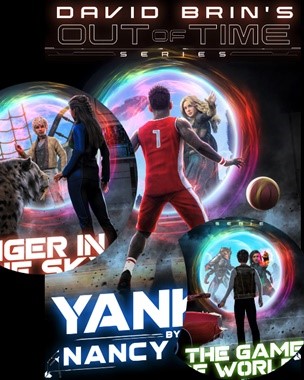
In Yanked! (written by Nebula winner Nancy Kress), kids from today — and assorted times in the past — get time-snatched to help humanity survive a great peril in the year 2345.
In Roger McBride Allen's The Game of Worlds (awarded the Hal Clement Award for "science fiction that teaches"), Adam O'Connor is no stranger to trouble — can he fight an enemy more skilled, cunning, and dangerous than he ever imagined?
In Sheila Finch's Tiger In the Sky (awarded the San Diego Book Award in the Youth Fiction category), teens yanked from 1999 must battle an alien menace — but how do you fight an enemy you can't bear to destroy?
It's one thing to portray this endeavor in fiction — the prospects, dangers and hopes for increasing animal (and possibly human) intelligence. But could it happen in real life? And if so, what are the ethical, biological, and political drawbacks?
How could such a program ever begin? Who would — or should — monitor it? And would the goal — an Earth civilization filled with diverse and beautifully different minds — be worth the costs of getting there? explore the possibilities
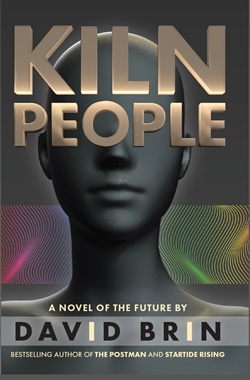
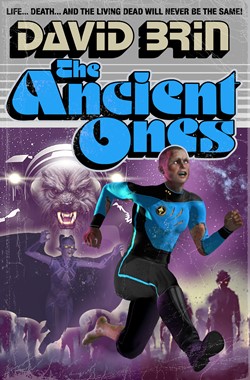
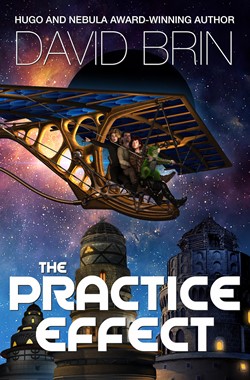
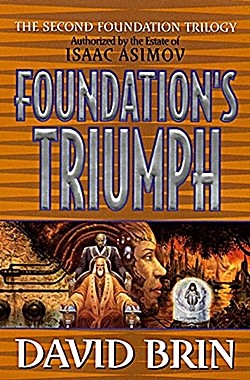
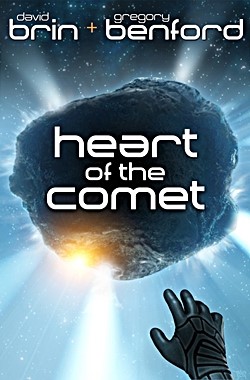
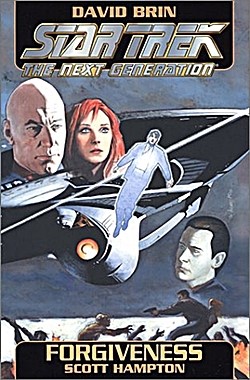
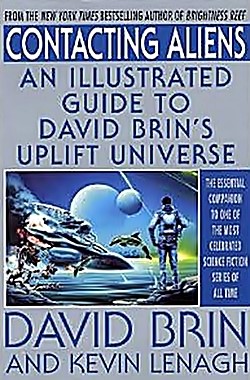
David Brin's science fiction novels have been New York Times Bestsellers, winning multiple Hugo, Nebula and other awards. At least a dozen have been translated into more than twenty languages. They range from bold and prophetic explorations of our near-future to Brin's Uplift series, envisioning galactic issues of sapience and destiny (and star-faring dolphins!). Learn More
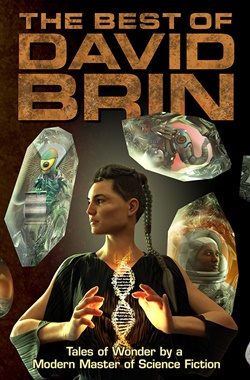
Short stories and novellas have different rhythms and artistic flavor, and Brin's short stories and novellas, several of which earned Hugo and other awards, exploit that difference to explore a wider range of real and vividly speculative ideas. Many have been selected for anthologies and reprints, and most have been published in anthology form. Learn More
Since 2004, David Brin has maintained a blog about science, technology, science fiction, books, and the future — themes his science fiction and nonfiction writings continue to explore. Learn More
Who could've predicted that social media — indeed, all of our online society — would play such an important role in the 21st Century — restoring the voices of advisors and influencers! Lively and intelligent comments spill over onto Brin's social media pages. Learn More

David Brin's Ph.D in Physics from the University of California at San Diego (the lab of nobelist Hannes Alfven) followed a masters in optics and an undergraduate degree in astrophysics from Caltech. Every science show that depicts a comet now portrays the model developed in Brin's PhD research. Learn More
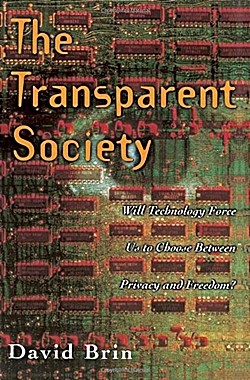
Brin's non-fiction book, The Transparent Society: Will Technology Force Us to Choose Between Freedom and Privacy?, continues to receive acclaim for its accuracy in predicting 21st Century concerns about online security, secrecy, accountability and privacy. Learn More
Brin speaks plausibly and entertainingly about trends in technology and society to audiences willing to confront the challenges that our rambunctious civilization will face in the decades ahead. He also talks about the field of science fiction, especially in relation to his own novels and stories. To date he has presented at more than 200 meetings, conferences, corporate retreats and other gatherings.Learn More
Brin advises corporations and governmental and private defense- and security-related agencies about information-age issues, scientific trends, future social and political trends, and education. Urban Developer Magazine named him one of four World's Best Futurists, and he was cited as one of the top 10 writers the AI elite follow. Past consultations include Google, Microsoft, Procter & Gamble, and many others. Learn More

All the Ways in the World to Reach David Brin
subscribe to David Brin's newsletter and keep up to date on his books, signings and appearances
share David Brin's pins from these Pinterest boards and share the word about science and science fiction
See more novel and book reviews.
"Like E E "Doc" Smith before him, Brin gives joy and imparts a Sense of Wonder; but he also thinks about the near world."
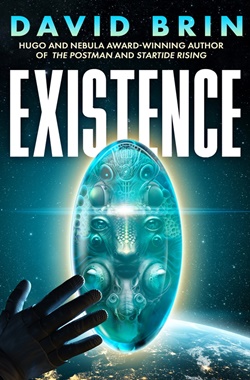
"Existence is a book that makes you think deeply about both the future and life's most important issues. I found it fascinating and I could not put it down."
So... we're starting to get accustomed enough to this new century to want it to be different from the last, which is why I've expanded my "laboratory" to the real world, blogging ideas and topics that pique, fascinate, and infuriate.
read my blog
Seeking concise background information, bios etc.?
my Press Kit/Backgrounder
a list of major interviews
complete professional biography
a compilation of social media pages
Brin's favorite quotes